Anthem
The Poison Belt
Ben, The Trapper
The High Place: A Comedy of Disenchantment
After Dark
Ben, The Trapper
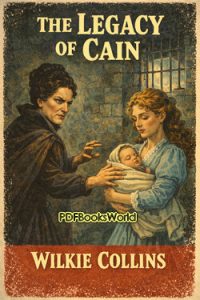
Published in 1888, The Legacy of Cain was the final novel completed by Collins and the last to be syndicated by Tillotson. The Legacy of Cain explores the theme of hereditary evil, and attacks the idea that 'bad blood' necessarily results in a criminality.
The main story begins in 1875. Helena and Eunice are sisters brought up by their father, the Reverend Abel Gracedieu. He has deliberately kept them in ignorance of their true ages because the elder daughter was adopted in 1858, after her natural mother was executed for the brutal murder of her husband. The story's main narrator is the prison governor who always feared the adoption would end badly because of the taint of inherited evil.
At the request of a person who has claims on me that I must not disown, I consent to look back through a long interval of years and to describe events which took place within the walls of an English prison during the earlier period of my appointment as Governor.
Viewing my task by the light which later experience casts on it, I think I shall act wisely by exercising some control over the freedom of my pen.
I propose to pass over in silence the name of the town in which is situated the prison once confided to my care. I shall observe a similar discretion in alluding to individuals—some dead, some living, at the present time.
Being obliged to write of a woman who deservedly suffered the extreme penalty of the law, I think she will be sufficiently identified if I call her The Prisoner. Of the four persons present on the evening before her execution three may be distinguished one from the other by allusion to their vocations in life. I here introduce them as The Chaplain, The Minister, and The Doctor. The fourth was a young woman. She has no claim on my consideration; and, when she is mentioned, her name may appear. If these reserves excite suspicion, I declare beforehand that they influence in no way the sense of responsibility which commands an honest man to speak the truth.
I looked at Eunice. She had risen, startled by her first suspicion of the person who was approaching us through the shrubbery; but she kept her place near me, only changing her position so as to avoid…
No person came to my room, and nothing happened to interrupt me while I was reading Mr. Philip Dunboyne’s letters. One of them, let me say at once, produced a very disagreeable impression on me. I ha…
My next quotations will suffer a process of abridgment. I intend them to present the substance of three letters, reduced as follows: Second Extract. Weak as he may be, Mr. Philip Dunboyne shows (in …
After having identified my handwriting, I waited with some curiosity to see whether Helena would let her anger honestly show itself, or whether she would keep it down. She kept it down. “Allow me to …
I knocked at the bedroom door. “Who’s there?” Only two words—but the voice that uttered them, hoarse and peremptory, was altered almost beyond recognition. If I had not known whose room it was, I mi…
I cannot prevail upon myself to dwell at any length on the events that followed. We secured my unhappy friend, and carried him to his bed. It was necessary to have men in attendance who could perform…
My first ungrateful impulse was to get rid of the two cumbersome ladies who had offered to be my companions. It was needless to call upon my invention for an excuse; the truth, as I gladly perceived, …
Eunice ran out to meet us, and opened the gate. She was instantly folded in Miss Jillgall’s arms. On her release, she came to me, eager for news of her father’s health. When I had communicated all tha…
After leaving Eunice, my one desire was to be alone. I had much to think of, and I wanted an opportunity of recovering myself. On my way out of the house, in search of the first solitary place that I …
When I next heard from Miss Jillgall, the introductory part of her letter merely reminded me that Philip Dunboyne was established in the town, and that Helena was in daily communication with him. I sh…

H. G. Wells
When he published his war fiction novelThe War in the Airduring 1907, no one in…
Read more
Captain Ravenshaw or The Maid of Cheapside – A Romance of Elizabethan London
Robert Neilson Stephens

Arthur Conan Doyle
The Tragedy of the Korosko (1898) is a novel by Sir Arthur Conan Doyle. It was …
Read more

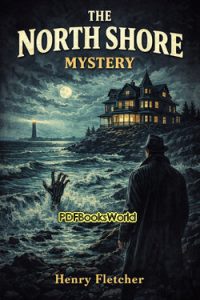
Henry Fletcher
The North Shore Mysterydraws readers into a quiet coastal community where uneas…
Read more