Twenty Thousand Leagues Under the Seas
On Death's Trail
The Mystery of Cloomber
Middlemarch
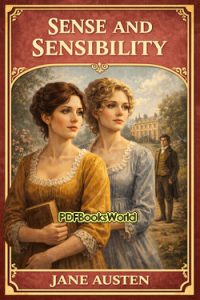
Sense and Sensibility
The Lost World
Middlemarchwritten byGeorge Eliot, a leading English novelist of the Victorian era is described by Martin Amis as "The greatest novel" in the English language. The novel narrates the lives of four couples with didactic tone and is based on many subjects such as marriage, self-interest, idealism, hypocrisy, religion, and education.Dorothea Brooke who likes to lead a simple life and help the local poor people marries much elder person Edward Casaubon being attracted towards his pretended intellectuality. The marriage is leads to unhappy relationship, as Casaubon believes his wife is lured by gossips about him through his cousin Will Ladislaw. Casaubon suspecting the relationship might break and Dorothea might marry Ladislaw. He went on to change his will stating Dorothea cannot inherit his properties after his death, if she marries Ladislaw.
Teritus Lydgate, a doctor finds his happiness in treating the poor and soon falls into huge debt. He borrows huge money from Bulstrode, which makes others to suspect as bribe. This incident creates break in the relationship between Lydgate and his fiancée Rosamond Vincy, however resolved by the intervention of Dorothea.
Childhood friends Mary Garth and Fred Vincy love each other and Fred proposes for marriage. However Mary Garth does not accept him as he is unfortunate to goes through endless failures in his quest for survival. Mary Garth accepts his marriage proposal, only after he settles down in his life when his tireless try ending in inheritance of his property.
Later Dorothea learns Casaubon’s will which forbid her from marrying Will Ladislaw. However it made a negative effect on Casaubon‘s thoughts, and much against his expectations Dorothea marries Ladislaw, rejecting the inheritable properties of her ex-husband.
FINALE.
THE END
Middlemarch
George Eliot
New York and Boston
H. M. Caldwell Company Publishers
To my dear Husband, George Henry Lewes,
in this nineteenth year of our blessed union.
PRELUDE.
Who that cares much to know the history of man, and how the mysterious mixture behaves under the varying experiments of Time, has not dwelt, at least briefly, on the life of Saint Theresa, has not smiled with some gentleness at the thought of the little girl walking forth one morning hand-in-hand with her still smaller brother, to go and seek martyrdom in the country of the Moors? Out they toddled from rugged Avila, wide-eyed and helpless-looking as two fawns, but with human hearts, already beating to a national idea; until domestic reality met them in the shape of uncles, and turned them back from their great resolve. That child-pilgrimage was a fit beginning. Theresa’s passionate, ideal nature demanded an epic life: what were many-volumed romances of chivalry and the social conquests of a brilliant girl to her? Her flame quickly burned up that light fuel; and, fed from within, soared after some illimitable satisfaction, some object which would never justify weariness, which would reconcile self-despair with the rapturous consciousness of life beyond self. She found her epos in the reform of a religious order.
That Spanish woman who lived three hundred years ago, was certainly not the last of her kind. Many Theresas have been born who found for themselves no epic life wherein there was a constant unfolding of far-resonant action; perhaps only a life of mistakes, the offspring of a certain spiritual grandeur ill-matched with the meanness of opportunity; perhaps a tragic failure which found no sacred poet and sank unwept into oblivion. With dim lights and tangled circumstance they tried to shape their thought and deed in noble agreement; but after all, to common eyes their struggles seemed mere inconsistency and formlessness; for these later-born Theresas were helped by no coherent social faith and order which could perform the function of knowledge for the ardently willing soul. Their ardor alternated between a vague ideal and the common yearning of womanhood; so that the one was disapproved as extravagance, and the other condemned as a lapse.
Some have felt that these blundering lives are due to the inconvenient indefiniteness with which the Supreme Power has fashioned the natures of women: if there were one level of feminine incompetence as strict as the ability to count three and no more, the social lot of women might be treated with scientific certitude. Meanwhile the indefiniteness remains, and the limits of variation are really much wider than any one would imagine from the sameness of women’s coiffure and the favorite love-stories in prose and verse. Here and there a cygnet is reared uneasily among the ducklings in the brown pond, and never finds the living stream in fellowship with its own oary-footed kind. Here and there is born a Saint Theresa, foundress of nothing, whose loving heart-beats and sobs after an unattained goodness tremble off and are dispersed among hindrances, instead of centring in some long-recognizable deed.
BOOK I.
MISS BROOKE.
Qui veut délasser hors de propos, lasse.—PASCAL. Mr. Casaubon had no second attack of equal severity with the first, and in a few days began to recover his usual condition. But Lydgate seemed to thin…
How will you know the pitch of that great bell Too large for you to stir? Let but a flute Play ’neath the fine-mixed metal: listen close Till the right note flows forth, a silvery rill: Then shall the…
They’ll take suggestion as a cat laps milk. —SHAKESPEARE: Tempest . The triumphant confidence of the Mayor founded on Mr. Featherstone’s insistent demand that Fred and his mother should not leave him…
“Close up his eyes and draw the curtain close; And let us all to meditation.” —2 Henry VI . That night after twelve o’clock Mary Garth relieved the watch in Mr. Featherstone’s room, and sat there alo…

“1 st Gent . Such men as this are feathers, chips, and straws, Carry no weight, no force. 2 d Gent . But levity Is causal too, and makes the sum of weight. For power finds its place in lac…

“Non, je ne comprends pas de plus charmant plaisir Que de voir d’héritiers une troupe affligée Le maintien interdit, et la mine allongée, Lire un long testament où pales, étonnés On leur laisse un bon…
’T is strange to see the humors of these men, These great aspiring spirits, that should be wise: . . . . . . . . For being the nature of great spirits to love To be where they may be most eminent; The…
Thrice happy she that is so well assured Unto herself and settled so in heart That neither will for better be allured Ne fears to worse with any chance to start, But like a steddy ship doth strongly p…
“C’est beaucoup que le jugement des hommes sur les actions humaines; tôt ou tard il devient efficace.”—GUIZOT. Sir James Chettam could not look with any satisfaction on Mr. Brooke’s new courses; but …
“If, as I have, you also doe, Vertue attired in woman see, And dare love that, and say so too, And forget the He and She; And if this love, though placed so, From prophane men you hide, Wh…

Mary Wollstonecraft Shelley
Frankenstein, a horror novel byMary Shelley. Victor Frankenstein a student of u…
Read more

Henry James
Confidence is a novel by Henry James, first published as a serial in Scribner's…
Read more

Henry Fletcher
The North Shore Mysterydraws readers into a quiet coastal community where uneas…
Read more